

100 g of plain makhana (fox nuts) has roughly 330 to 360 kcal, about 9 to 10 g of protein, under 1 g of fat and around 77 g of carbohydrate. A typical 30 g snack serving gives about 100 to 110 kcal. Makhana can fit into a weight-loss plan when you control the portion and the way it is roasted, but no single food causes weight loss on its own.
This article is for general information only and is not medical advice. If you have diabetes, kidney disease, a food allergy or any other health condition, or you are pregnant, please check with your doctor or dietitian before changing your diet.
Makhana is one of the most searched snacks in India, and most people ask the same two questions: how many calories does it have, and will it help with weight loss? As nutrition professionals, we see a lot of confusion here. Some labels call it “zero calorie” and others call it “super low calorie”, and neither is accurate.
This guide gives you the facts in plain language: the nutrition numbers, what they mean in a real serving, how roasting and flavouring change the calories, and how to use makhana sensibly if you are trying to manage your weight.
Makhana Nutrition Facts per 100 g
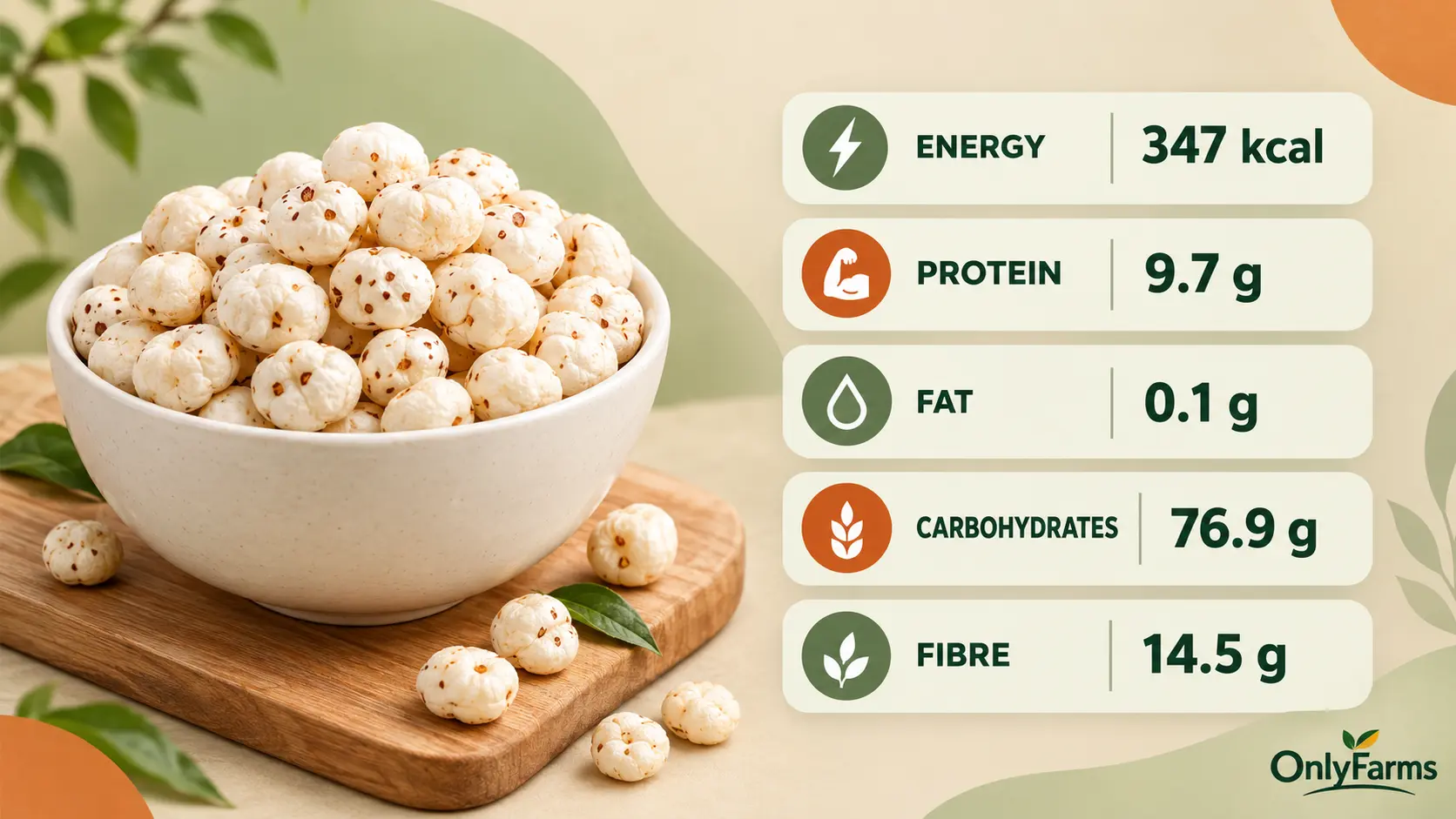
Makhana, also called fox nut, lotus seed or phool makhana (Euryale ferox), is a seed that is popped before eating. Published values differ a little between sources because of the variety, the growing conditions, the moisture level and whether the figure is for raw seeds or popped makhana. The table below shows commonly cited values for plain, unflavoured makhana, along with the range you will see across sources.
| Nutrient (per 100 g) | Commonly cited value | Range seen across sources |
|---|---|---|
| Energy | about 347 kcal | 328 to 362 kcal |
| Protein | about 9.7 g | 8.7 to 10.5 g |
| Fat | about 0.1 g | 0.1 to 0.5 g |
| Carbohydrate | about 77 g | 77 to 80 g |
| Dietary fibre | about 14.5 g | 7.6 to 14.5 g |
| Calcium | about 60 mg | 50 to 60 mg |
| Sodium (plain) | very low, about 9 mg | varies with salt added |
What the numbers tell us:
- Makhana is very low in fat, which is why it feels light compared with fried snacks.
- It is not a low-calorie food per gram. Because it is mostly starch, 100 g still gives about 350 kcal. What makes it useful is that it is airy, so a satisfying bowl weighs very little.
- It gives a modest amount of protein, not a high-protein food on its own.
- Mineral values (potassium, magnesium, phosphorus, iron) vary widely between sources, so we have not listed a single figure. For exact values for a specific product, check the lab report or the label.
How Many Calories in One Serving of Makhana?
Nobody eats 100 g at a time, so here is a more practical view. The figures below are approximate and are for plain makhana.
| Portion | Calories (approx.) | Protein (approx.) | Carbohydrate (approx.) |
|---|---|---|---|
| 10 g (a small handful) | about 35 kcal | about 1 g | about 8 g |
| 30 g (one snack serving) | about 100 to 110 kcal | about 3 g | about 23 g |
| 50 g | about 175 kcal | about 5 g | about 38 g |
Tip: Makhana is so light that it is easy to over-pour. Weigh your first few servings on a kitchen scale so you learn what 30 g looks like in your own bowl.
Do Roasting and Flavouring Change the Calories?
Yes, and this is where most people go wrong. Plain makhana is light, but what you add to it can change the numbers quickly.
| Preparation (30 g serving) | Approximate calories | Note |
|---|---|---|
| Dry roasted, plain | about 105 kcal | The lightest option |
| Roasted with 1 tsp ghee or oil | about 150 kcal | Each teaspoon adds roughly 40 to 45 kcal |
| Salted or masala flavoured | check the label | Calories and sodium depend on the recipe |
| Sweet, caramel or chocolate coated | check the label | Usually much higher in sugar and calories |
Note: The seed is not the problem. The oil, sugar and salt around it are. If you are watching calories, dry roasting or slow roasting with very little fat is the simplest choice, and the Nutrition Facts panel on a packet is always more reliable than the front-of-pack claims.
Is Makhana Good for Weight Loss?
Makhana can be a useful part of a weight-loss plan. It cannot burn fat or melt belly fat by itself, and anyone who says so is overselling it. Weight management comes down to your overall eating pattern, activity, sleep and consistency.
Here is why makhana can help when used well:
- It is light and crunchy. A bowl feels like a proper snack, which can make it easier to stay satisfied between meals.
- It is low in fat. Swapping a fried snack for plain roasted makhana can reduce your calorie intake for that snack.
- It contains some fibre and protein. These contribute to feeling full, though the amounts in one serving are modest.
- It is easy to portion. Because it is light, it is easy to pack in a small box and carry to work.
And here is where it can go wrong:
- Eating large quantities because it feels “healthy”.
- Choosing heavily flavoured, buttered or sweet versions.
- Treating it as a replacement for meals instead of a snack.
- Expecting one food to do the work that a balanced diet does.
How to Eat Makhana Smartly for Weight Management?
These are general tips, not a personal diet plan.
- Stick to a sensible portion. About 25 to 30 g is a reasonable snack serving for most adults.
- Choose dry roasted or lightly roasted. Keep added ghee, oil and sugar low.
- Read the label. Check calories per serving, sugar and sodium, especially on flavoured packs.
- Pair it with protein. A small bowl of makhana with curd, or alongside a few nuts, makes a more balanced snack than makhana alone.
- Use it to replace, not to add. The benefit comes when makhana takes the place of a fried or sugary snack, not when it is eaten on top of everything else.
- Eat it mindfully. Serve it in a bowl rather than eating from the packet.
- Keep it crisp. Store it in an airtight container, away from moisture, so it stays crunchy and you do not feel the need to add extra flavouring.
How Much Makhana Can You Eat in a Day?
For most healthy adults, one small serving of around 25 to 30 g as a snack is a reasonable starting point. Your ideal amount depends on your age, activity level, health goals and the rest of your diet. Some people may be advised to eat less or avoid it, so if you have a medical condition, ask your doctor or dietitian.
Who Should Be Careful?
- People with diabetes or on a blood sugar plan. Makhana is mostly carbohydrate, so portion size and what you eat it with matter. Please follow your doctor’s advice.
- People with kidney conditions. Some dietary restrictions involve potassium and phosphorus, so check with your care team.
- People with digestive sensitivity. A sudden large increase in fibre can cause bloating for some people.
- Anyone with allergies. Flavoured products may contain other allergens. Always read the label.
- Pregnant or breastfeeding women and young children. Ask your doctor or dietitian about suitable portions.
Frequently Asked Questions
How many calories are in 100 g of makhana?
Plain makhana has roughly 330 to 360 kcal per 100 g, with about 347 kcal being a commonly cited value. The exact number varies slightly by source, moisture level and whether it is raw or popped.
How many calories are in 30 g of makhana?
Around 100 to 110 kcal for plain, dry roasted makhana. If it is roasted in ghee or oil, or coated with seasoning, the figure goes up, so check the label.
Is makhana good for weight loss?
It can be a helpful snack because it is light, crunchy and low in fat, especially when it replaces fried snacks. It will not cause weight loss on its own. Portion size, preparation and your overall diet matter most.
Is makhana high in protein?
Makhana has about 9 to 10 g of protein per 100 g, which is about 3 g per 30 g serving. That is a modest amount. Pairing it with curd, nuts or seeds can make a snack more filling.
Is makhana high in carbohydrates?
Yes. Most of its calories come from carbohydrate, about 77 g per 100 g. It also contains fibre, but people who count carbohydrates should measure their portions.
Does roasted makhana have more calories than raw?
Dry roasting changes the calories very little. The difference comes from added ghee, oil, sugar or coatings. A teaspoon of ghee or oil adds roughly 40 to 45 kcal.
Can I eat makhana at night?
There is no special rule against it. What matters more is your total intake for the day and the portion size. A small, plain serving is a lighter choice than a fried snack.
Looking for Quality Makhana in Bulk?
If you run a retail store, a snack brand, a restaurant or a gifting business, consistent grading and clean processing matter as much as the nutrition numbers. OnlyFarms sources makhana directly from Bihar growers, grades it by size and slow roasts it, with batch-wise quality checks. We supply plain and flavoured makhana in retail packs and 5, 10 and 25 kg bulk bags.
Get a bulk quote: WhatsApp or call +91 7011050912, or email info@onlyfarms.in.
